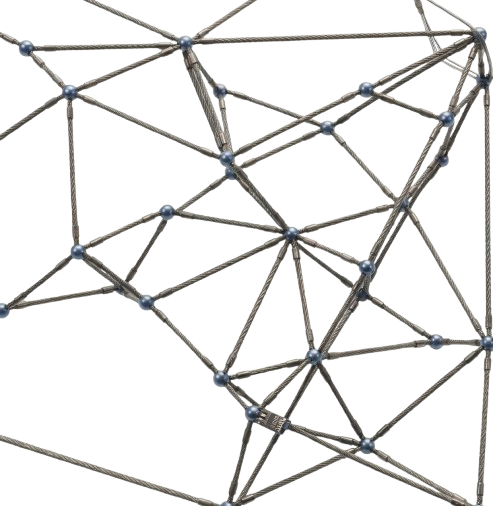
Cable Network Analysis — conveniently analyze cable networks or systems of interconnected cables.
CableNetwork is a standalone application for the structural analysis of cable network systems. The user defines the geometry, cable properties, supports, and loads. CableNetwork then finds the equilibrium shape of the network and reports the cable forces and displacements engineers need for design and verification.
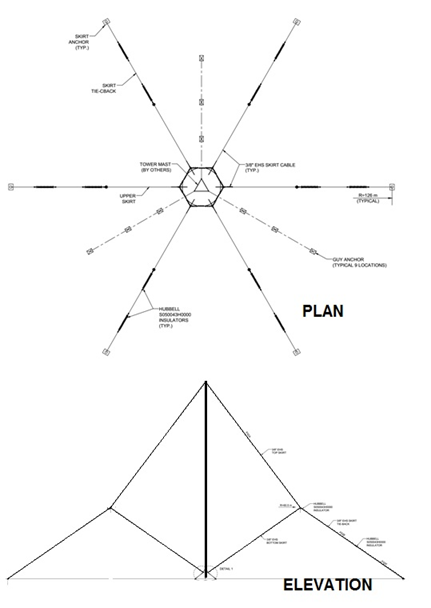
Many FEA applications allow tension-only elements, which behave as rods for the analysis of cables under considerable tension like prestressing cables and roof supporting structures. What these programs typically do is remove the cables that go into compression. While this is satisfactory for cases where the distance between the two ends of the cable always remains longer than the unstressed or cutting length of the cable, it is not very useful where the distance between the two ends of the cable are closer to each other than the unstressed length of the cable. Note that, in the case of cables, even if the distance between the two ends of the cable is closer than the unstressed length, the sag condition, the cable can have tension in it, which is due to self-weight and other transvers loads on the cable element.
In CableNetwork, we use cable elements, not rods, so we can maintain the whole network and still arrive at a balance of forces in the cables, while keeping compatibility of deformations and network shape.
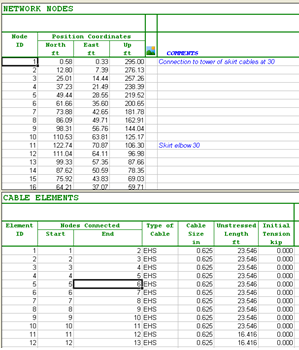
The input data and reporting are done through fairly clear and simple tables that most engineers are familiar with.
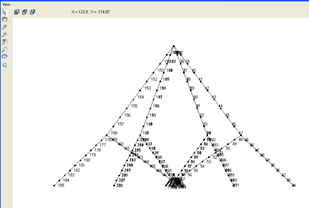
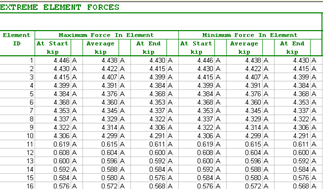
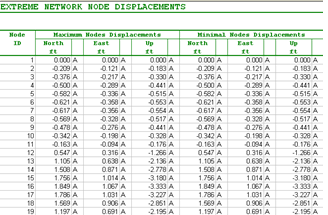
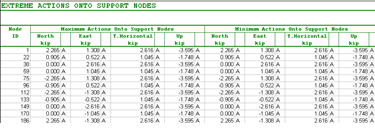
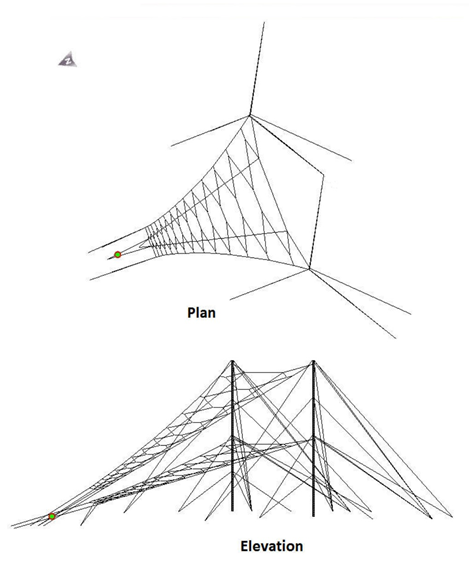
The results can be reported on screen in the interface, in document form as a rich text report, or even in graphical format, as can be seen in the second example.
Accounts for large displacements and the true sagging behaviour of cables.
Self-weight, point loads, wind, ice, and combined load cases.
Cable tensions at each end, cable lengths, sag, support reactions, and node displacements.